
Glandhand Maintenance
October 28, 2017Gladhand Maintenance TIPS
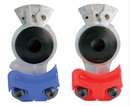 Gladhands are a critical part of the air brake system but often neglected. Every time we drop and connect a trailer we are allowing possible contamination of the air brake system to moisture and debris. So let's be careful to ensure our brakes can work properly by keeping our gladhands working properly.
- Watch for loss of tension when coupling and uncoupling gladhands. This is a sure sign they need to be replaced. Often the complete gladhand may not need replacing, but you can replace the gladhand air seal. These are a low-cost part that we recommend keeping in your truck in the event a seal is damaged. They are easy to replace.
- Store gladhands in their stowage when dropping a trailer. This will keep air lines sealed, keeping moisture and debris out.
- Gladhands should be replaced at the first substantial signs of damage/corrosion or when air lines are replaced.
- Gladhand seals should be inspected regularly and replaced at least once a year based on usage.
Need to buy gladhand parts for your truck/trailer. Buy truck and trailer Gladhand parts here.
Body
Most standard gladhand bodies are made from aluminum. In highly corrosive environments the followings should be noted:
- Use anodized gladhands for added protection against corrosion.
- Powder coating will chip away over time leaving the area exposed and vulnerable to corrosion-causing contaminants.
- Corrosion is easily visible on the outside, but it can also build up on the interior cavity of the gladhand. If corrosion buildup begins to chip away, it will enter the air lines causing damage to the system.
Detent Plate & Rivets
The detent plate and connector plate work together to lock the gladhands together. After many cycles of coupling/uncoupling, the metal starts to shave off and create grooves in the detent plate. Corroded rivets on the detent plate will cause the plate to loosen, eventually breaking off making coupling impossible. To avoid damage:
- Replace the gladhand when the detent plate shows signs of heavy wear or the plate is loose.
- Replace the gladhand if there are substantial signs of corrosion on the rivets and detent plate.
- Stainless steel offers the best corrosion protection.
Connector Plate
The connector plate works in conjunction with the detent plate to lock the gladhands together when coupled. The small dimple on the plate falls into place with the detent plate on the other gladhand to maintain a secure union. Over time this dimple wears down and the gladhand starts to lose the ability to seal properly when coupled. To maintain a proper seal:
- Replace the gladhand when the dimple wears down.
- Replace the gladhand if the connector plate is loose.
- Use gladhands with stainless steel or powder coated stainless steel connector plates for anti-corrosion protection.
Gladhand Seals
 Gladhand seals enable the coupled gladhands to seal tightly. However, seals eventually wear out over time due to the turning action of coupling/uncoupling. To prevent damaged and worn out gladhand seals:
- Gladhand seals should be inspected regularly and replaced at least once a year based on usage.
- Polyurethane seals last longer than standard materials because they hold up better against the elements.
- Using filter screens in conjunction with gladhand seals helps to keep debris out of the air lines.
- Gladhand seals with flaps help seal the gladhand shut when it is disconnected, keeping moisture and debris out of the air brake system. Always replace these seals when flaps are torn or damaged, and ALWAYS use a coned filter screen with this type of gladhand seal.
- Always carry extra gladhand seals to replace leaking and/or damaged seals.
Overall Gladhand Care
- Watch for loss of tension when coupling and uncoupling gladhands. This is a sure sign they need to be replaced.
- Store gladhands in their stowage when dropping a trailer. This will keep the air lines sealed, keeping moisture and debris out.
Thank you to Phillips Industries for these great tech tips for gladhand maintenance.