
How To Spot A Radiator Leak and More
February 28, 2017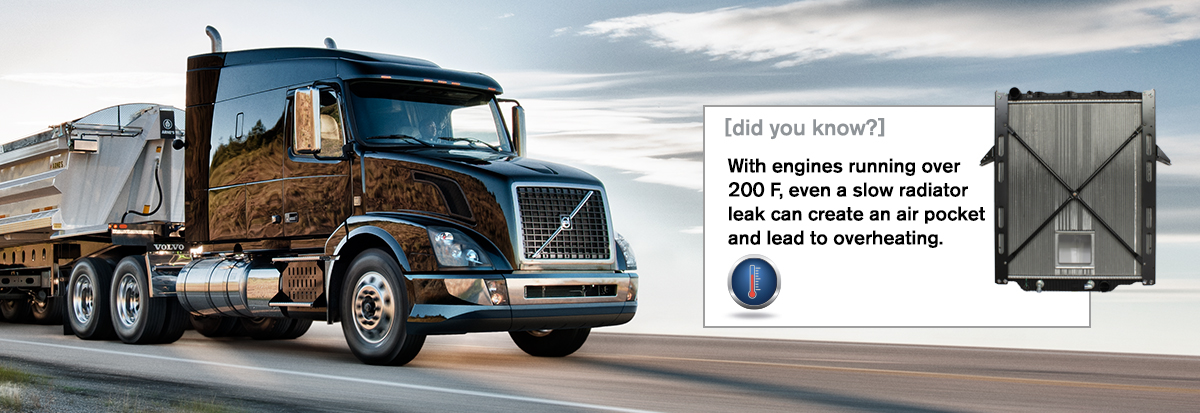
What do a damaged head gasket, burst hoses, and a busted thermostat have in common? Each can lead to a costly engine repair, and each can be caused by a failed or malfunctioning radiator.
Radiators are heat exchangers. They take the hot coolant from a truck’s engine and feed it through the radiator core and into a series of tubes. From the tubes, the heat is transmitted to the radiator’s fins, which then release the heat into the outside air. The now-cooled coolant is fed back into the engine to absorb heat again.
If a truck’s radiator isn’t working properly, that exchange of heat is diminished. At minimum, a truck will experience a power drain as high coolant temperatures force the fan to run more often. At worst, multiple engine components can be damaged.
Luckily, there are several easy-to-spot signs that can indicate a radiator problem. Here are some of the things to look for:
- Dirt, debris, or paper in the grille. Open the truck’s hood and check for obstructions on the grille or the radiator’s front surface. If either is blocked, airflow cannot circulate properly through the radiator and transfer heat from the coolant. Higher coolant temperatures will force the radiator fan to turn on more often, which can drain 30 horsepower or more from your drivetrain.
- Cracked radiator housing. One of the top-reported causes of OEM radiator failure is using the longer side-tank bolt in the top tank position. This can cause visible cracks in the plastic on the sides of the radiator.
- Cracked radiator cap. A cracked radiator cap can throw off coolant pressure, increasing its boiling point and affecting cooling system performance overall. A cracked radiator cap can allow too much pressure to build up, which can lead to a burst hose, radiator tank leak or radiator seam leak. Click here to check out our selection of Volvo Truck Radiator Caps
- Dirty of damaged fins. Fins that are clogged with dirt or debris, or excessively damaged, will make the heat-transfer process much less efficient.
- Low coolant levels. You can visually check coolant levels to see if a truck is low. But don’t just add water. To achieve the correct temperatures, a radiator must maintain the correct balance of coolant and water.
- Leaking coolant. Don’t ignore drips or streaks of coolant. And don’t delay identifying the source of the leak. Even a slow leak can raise coolant temperatures, creating an air pocket that can cause an engine to overheat.
- Collapsed radiator hose. A collapsed or spongy hose can prevent coolant from moving through the cooling system as designed and cause an engine to overheat. Collapsed or spongy hoses should be replaced. Click here to check out our selection of Volvo Truck Radiator Hoses.